Pressure Testing
Verify operating pressure at every zone and identify pressure drops that indicate leaks or blockages.
Hitech Medical Gas Pipelines performs scheduled oxygen pipeline maintenance for hospitals, nursing homes, and clinics across Punjab. From routine pressure testing and leak repair to valve servicing and alarm verification — we keep your pipeline compliant and ready for critical care.
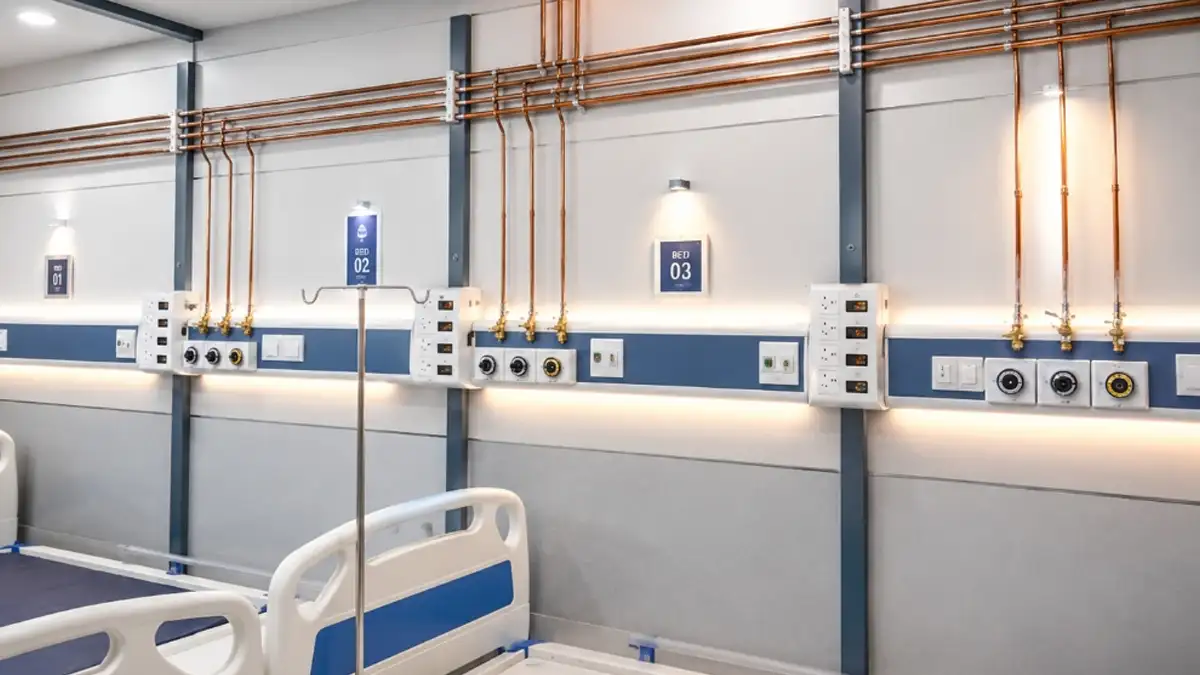
Oxygen pipeline failures rarely happen suddenly. They develop slowly — a small leak that grows over months, a valve that gradually seizes, a seal that loses elasticity after years of use. None of these are visible during daily hospital operations. All of them become dangerous under peak demand.
Regular maintenance catches these issues before they become emergencies. A pressure test that reveals a slow leak lets you fix it on a planned schedule — not during an ICU crisis at 2 AM. This is why NABH and NFPA 99 both require documented pipeline maintenance for accredited hospitals.
Verify operating pressure at every zone and identify pressure drops that indicate leaks or blockages.
Locate leaks at joints, outlets, and valve connections — repairing minor ones on the spot.
Test isolation valves for operability — critical for emergency isolation during repairs.
Verify self-sealing function and gas-specific connection integrity at every outlet.
Test alarms trigger correctly at threshold pressures and verify audible/visible alerts.
Minor repairs on-site. Larger issues quoted separately with full transparency.
Written service report with findings, repairs, and recommendations for accreditation.
Next inspection scheduled — or converted to an AMC plan for continuous coverage.
Bare minimum for small clinics and low-usage facilities. Compliant with NABH requirements but doesn't provide early warning against slow-developing leaks.
Best for: Small clinics with single-ward oxygen use.
The standard for hospitals with critical care units. Catches developing issues every 3 months — preventing most emergency callouts.
Best for: Hospitals with ICU, OT, or multiple wards.
For high-usage facilities where pipeline failures are catastrophic. Every 2 months — combined with real-time pressure monitoring.
Best for: Large hospitals, dedicated ICUs, and multi-OT facilities.
Maintenance is a service. AMC is a service contract. Both keep your pipeline safe — but they work differently:
Most hospitals start with a maintenance visit to assess the pipeline's current condition — then transition to an AMC for ongoing coverage. The maintenance visit serves as a baseline inspection.
View AMC plans →Full pipeline maintenance across wards, ICUs, and OTs.
Scheduled maintenance for smaller oxygen systems.
Annual or quarterly checks for small practices.
High-frequency maintenance for critical care environments.
Our team will visit your facility, assess the pipeline's condition, and provide a detailed maintenance report.